

How to pay your water bill
What the site says is weak. What visitors do: they arrive and leave. Stickiness 22%.
From the Digest · From analyticsUpdate
Two thousand pages or twenty thousand. A Digest reads all of them the way an editor would, through the eyes of every person your site serves, and tells each member of your team what to fix first.
Most site audits read the code. Missing tags, slow scripts, broken links. Useful, and finished in an afternoon.
The thing that actually costs you is in the words. A page that says the same thing as another page. A deadline written as if it still mattered. A service page nobody links to. A paragraph pitched at a grade 14 reader on a site for everyone.
Nobody reads 2,000 pages to find those, let alone 20,000. The site is too big for anyone to read. So nobody does, and it quietly gets worse.
Content Studio reads it. Every page, in context, through the lens of each persona your site serves: is it good, does it fit, and what should happen to it next.
A Digest is one read of the whole site. On a large site it turns up tens of thousands of findings, so it comes back as a short list of the fixes to tackle first, each one handed to the team that owns that part of the site. They fix it in your CMS. Then the next Digest reads the site again.
A Digest reads every published page, front end only, the way each of your visitors arrives.
Tens of thousands of findings become a handful of picks. Where to start, not a spreadsheet.
Each pick goes to a content owner, a developer, or an accessibility lead.
They change the page in your CMS. Content Studio never touches your site.
The next Digest is the witness. Fixed means the site says so, not a checkbox.
It stops at the same door your visitors do. It only sees what you publish.
Four findings from Wrenford, the fictional city the series audits. Every card is text the Digest wrote, word for word.
What the site says is weak. What visitors do: they arrive and leave. Stickiness 22%.
Two pages make the same promise, worded a little differently. Visitors land on either one. Search cannot tell them apart.
This page still says “until June 30, 2025,” which has passed. Update or remove that passage; the rest of the page stands.
This page is about a date that has passed, and the page offers nothing after it. Remove it.
Two set the scene. Nine are each about one thing it finds that a crawler cannot see, because it lives in the words, the structure, or the gap between what you wrote and what people ask.

Why reading beats scanning, and what you get back.
The loop: read, pick, delegate, fix, read again.
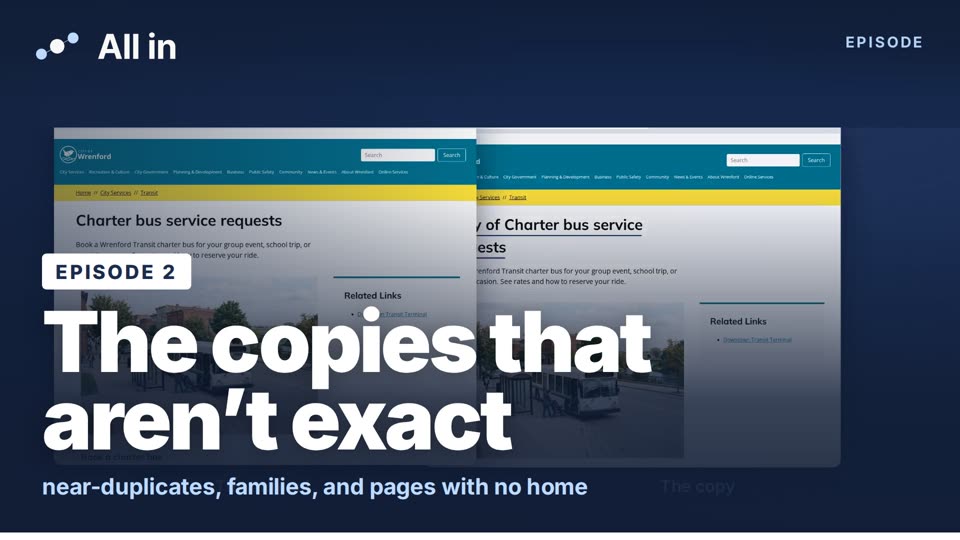
Near-duplicates, families, pages with no home.
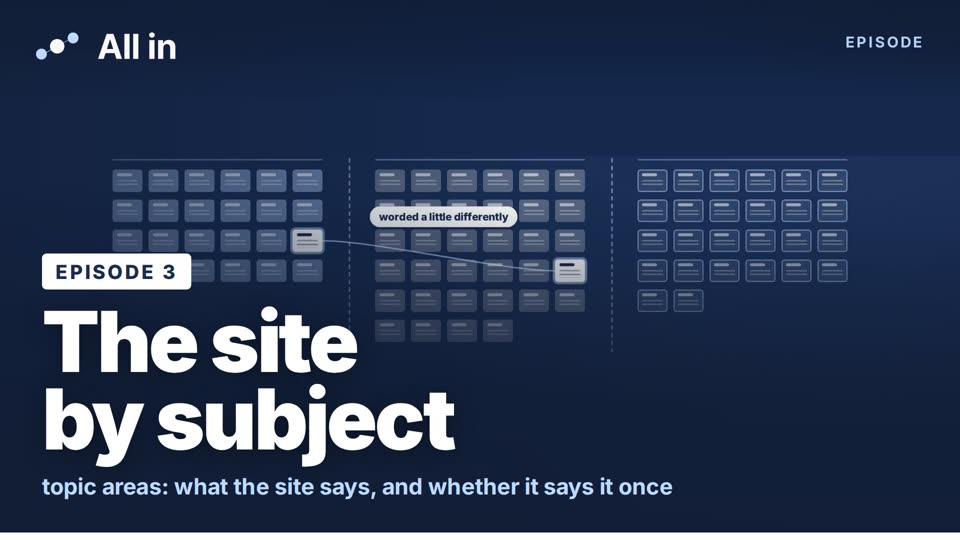
Topic areas, and who is cannibalising whom.
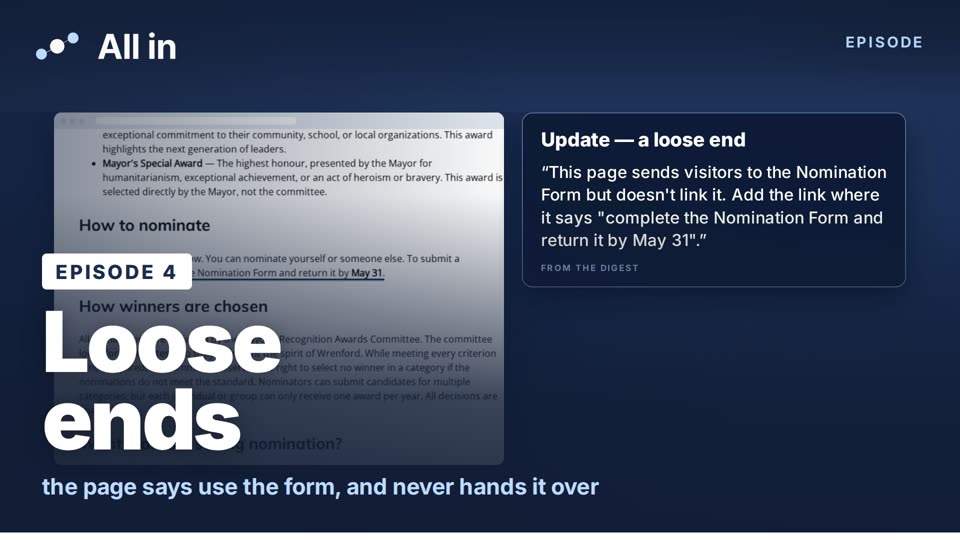
Broken links, orphans, redirects that redirect again.
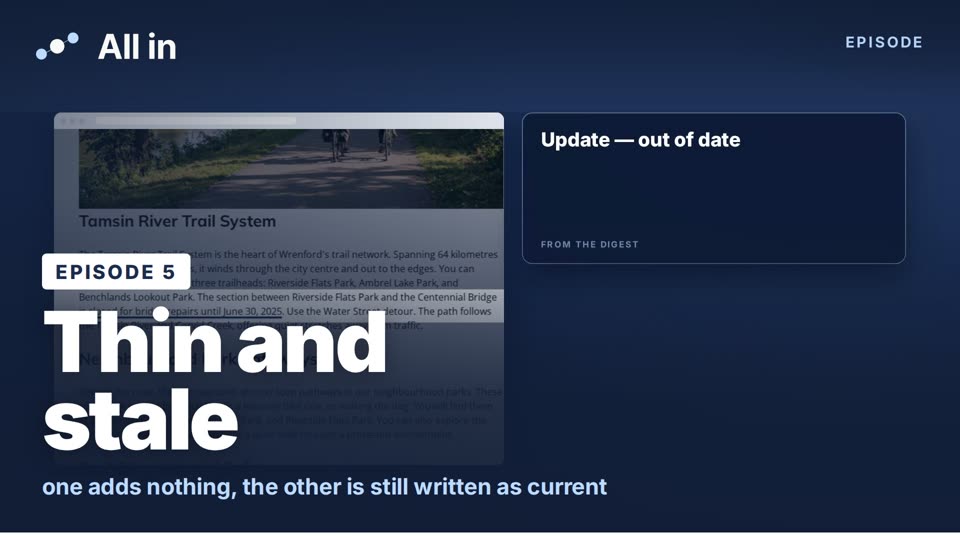
Pages that add nothing, and dates that have passed.
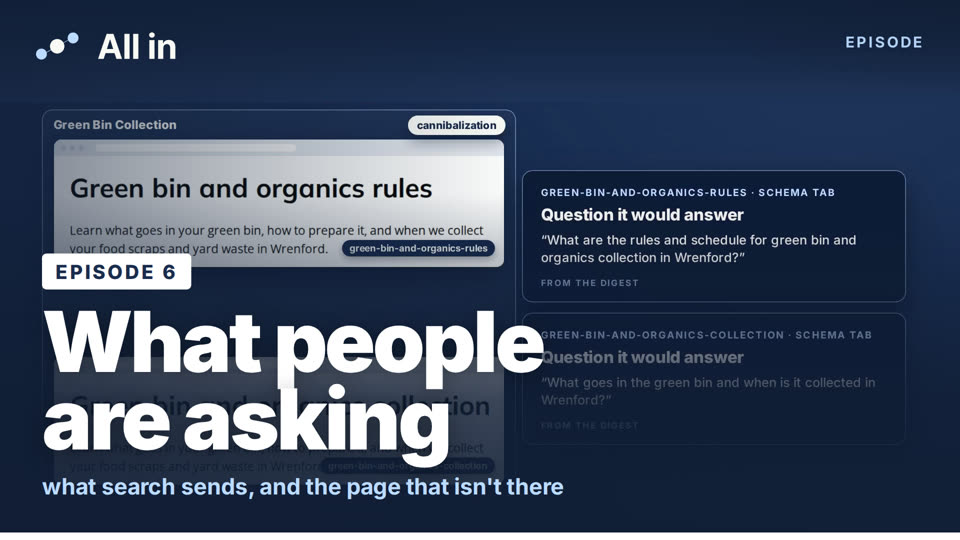
Search questions your site almost answers.
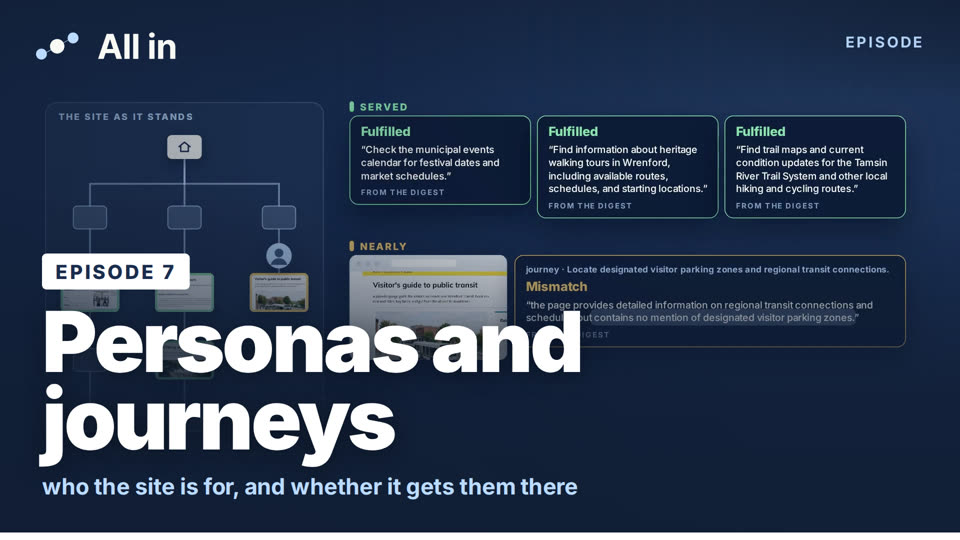
Can a new resident actually get the thing done?
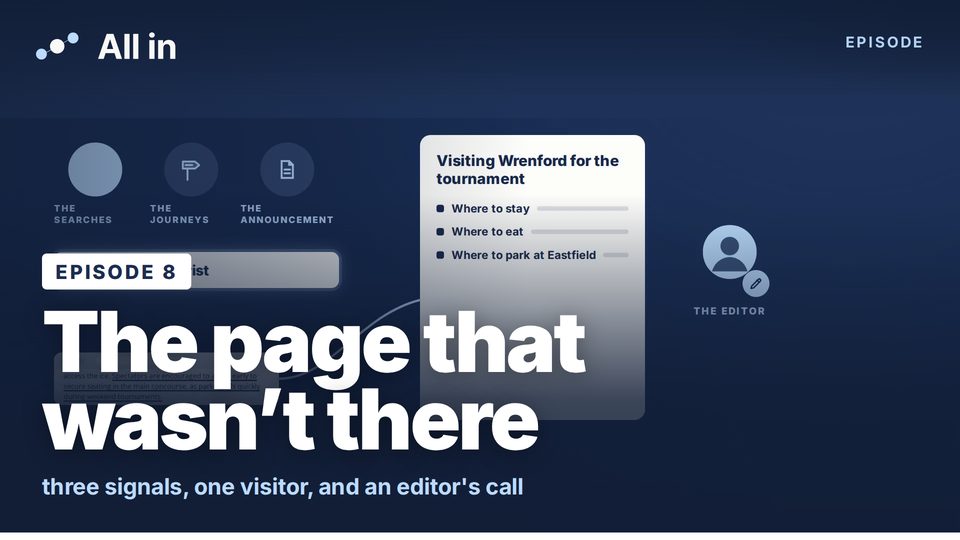
The page that should exist and doesn’t.
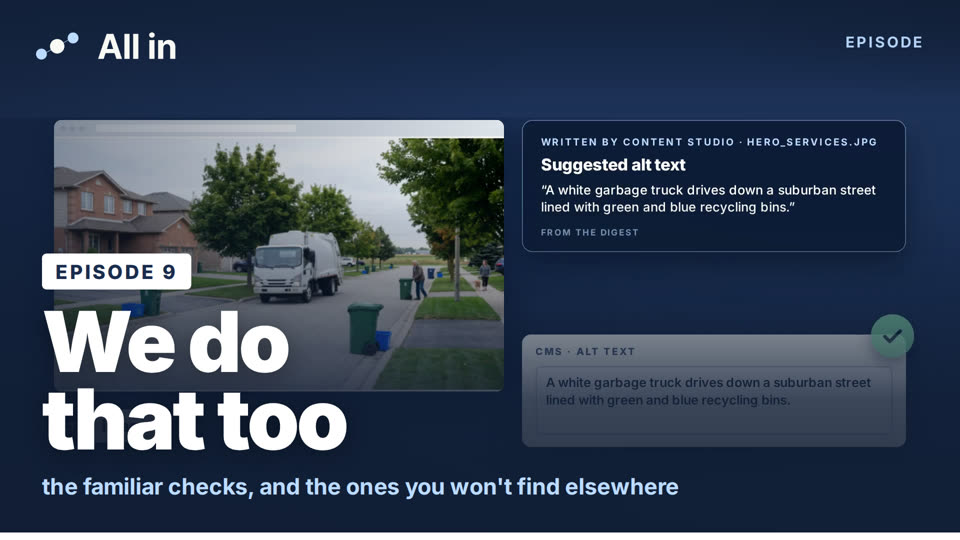
Accessibility, images, reading level, structure.
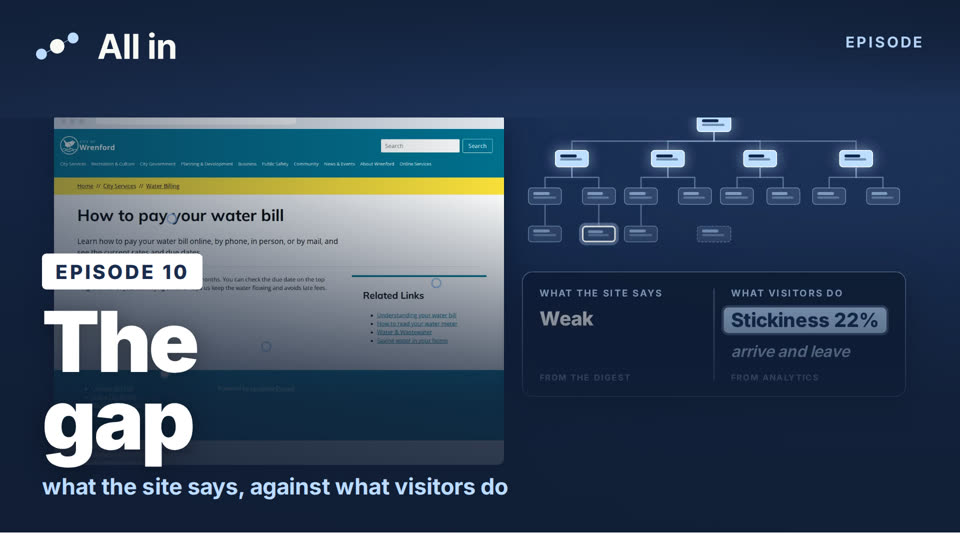
What the site says against what visitors do.
Every page in a Digest comes back with one word. The word says what kind of decision the page needs, not what to type. Four of them come from the Digest. The fifth is yours.
Leave it alone. Most pages come back this way.
It carries the site. Change it on purpose or not at all.
Worth keeping, and something on it is wrong.
Its reason to exist has passed, or another page already says it.
A one-off audit is a photograph of a thing that moves. A month on, three departments have published, a bylaw changed, and the picture is wrong again.
Content Studio runs a Digest as often as every week, or on whatever rhythm your publishing already keeps: after each release, each month, each council cycle. Every run compares itself to the last one, so what moved is the first thing you see, and a fix only counts when the next read agrees.
Wrenford · demonstration data
A fixed monthly fee set by how many pages your site has. Everyone on your team gets in. Numbers below are placeholders until pricing is set.
For a single site with one editor and a developer on call.
$— per month
For a municipality, a college, or an agency running several clients.
$— per month
Several properties, custom cadence, a named contact.
Contact us
Tell us the site. We run the first Digest, walk you through what it found, and you decide whether the loop is worth running on your schedule.
No install, no plugin, no access to your CMS. We read what you publish.